
The Purity Crisis: When Basic Nutrition Becomes a Silent Health Risk
When a mother hands her child a glass of milk, it is an act of love—a silent promise of nourishment. Yet, in modern India, that promise is being broken. Instead of calcium and protein, that glass may contain urea, detergent, or synthetic chemicals. From the air we breathe to the spices in our kitchens, the “purity” of our natural resources is being systematically dismantled for the sake of mere profit.
A Systemic Erosion: From Soil to the Developing Brain
We are witnessing a deteriorating cycle where our most fundamental resources—air, water, and soil—are no longer available in their original form. This is not just environmental neglect; it is a public health emergency. Contaminated soil produces toxic crops, and polluted water sources compromise our dairy and livestock.
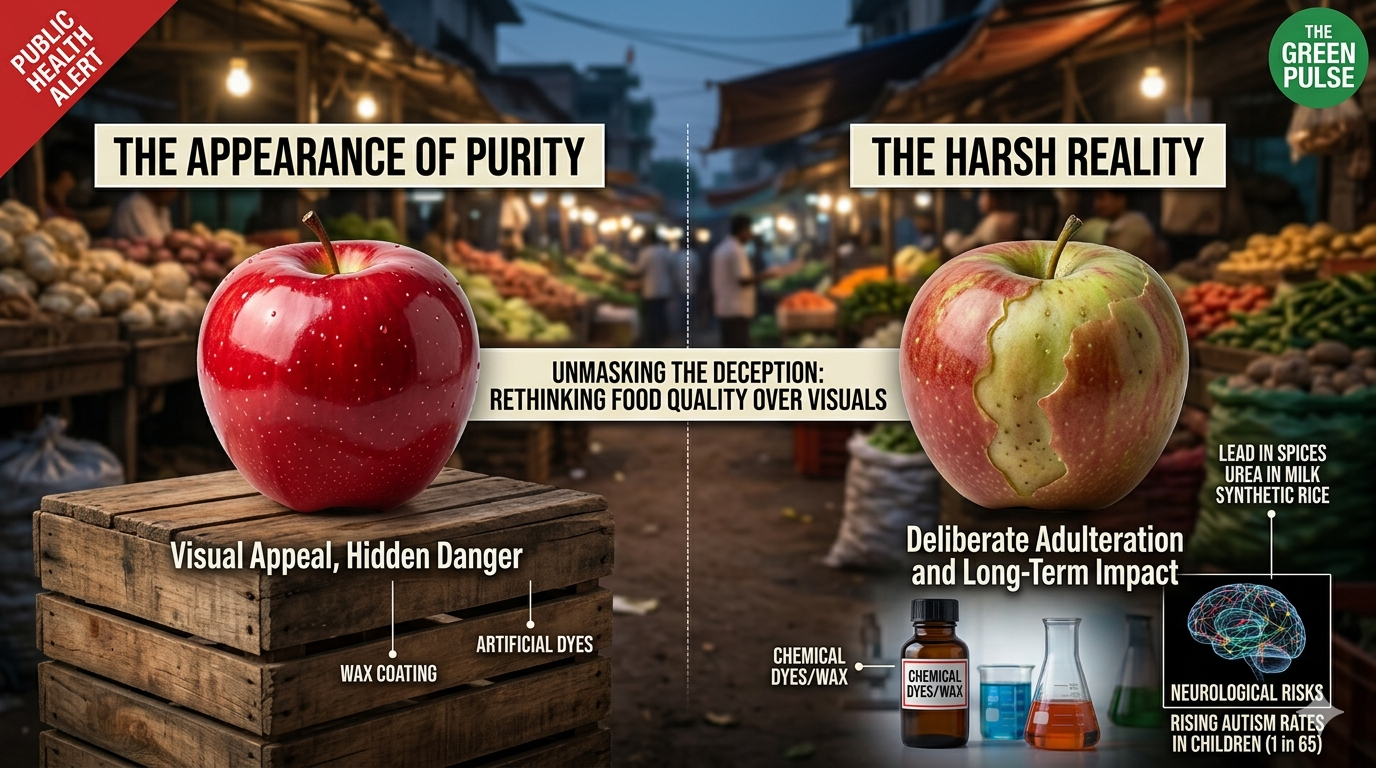
However, we must also look inward. To a great extent, we are responsible for the prevalence of adulterated food. We only buy those fruits and vegetables which look vibrant and shiny, have a smooth finish, and are bright-colored. We want fruits which are sweet and juicy. The seller takes advantage of our choices and “makes” them accordingly by mixing colors, sweeteners, wax, or anything which gives them a fresh look—even if the substances used are toxic or carcinogenic. We must understand that every shiny thing is not fresh and pure.
The Toll of Intentional Malpractice
The most insidious threat is the intentional and deliberate adulteration of our staples. It is a calculated crime for profit. We see this daily in:
- Spices: Mixed with lead chromate, sawdust, or artificial colors to enhance weight and appearance.
- Rice & Pulses: Polished with hazardous chemicals or mixed with cheaper, look-alike stones and synthetic grains to increase volume.
- Essential Commodities: Ghee, mustard oil, and honey are increasingly mixed with cheaper oils or invert sugar, turning basic nutrition into a silent health risk for families everywhere.
The Rising Toll: Autism and Neurodevelopmental Risks
Perhaps the most alarming consequence of this chemical onslaught is the impact on our children’s neurological health. India is seeing a continuous rise in neurodevelopmental disorders, with recent estimates suggesting that approximately 1 in 65 children may now be affected by Autism Spectrum Disorder (ASD).
While genetics play a role, scientists are increasingly pointing to environmental triggers—specifically the “cocktail effect” of toxins found in adulterated foods:
- Heavy Metals: Lead and mercury, often used as colorants in spices, are known neurotoxins that disrupt brain development.
- Pesticides & Ripening Agents: Excessive exposure to organophosphates and calcium carbide creates chronic inflammation, which researchers believe is a factor in rising behavioral challenges.
The Power of Public and Political Intervention
To reclaim our health, food safety must move from a personal struggle to a collective responsibility.
- Community Vigilance: Platforms like “Food Safety Connect” allow consumers to report suspicious local units instantly.
- The “One Health” Approach: This framework recognizes that human health is linked to the environment. Restoring our soil reduces the heavy metal load in our food chain.
- Political Accountability: When food safety and the “autism surge” are debated in Parliament, it sends a message that this is a systemic failure, pushing bodies like the FSSAI toward aggressive enforcement and nationwide “Anti-Adulteration Drives.”
A Call to Action: From Price to Purity
The surge in digital awareness—with citizens searching for “Cold-pressed oil” or “A2 Gir Cow Ghee”—proves that behavior is shifting from price-based buying to quality-driven decisions. We can no longer afford to be passive. Every time we report a suspicious product or choose a verified, transparent source, we cast a vote for a healthier India.
The Path Forward:
- Be a “Citizen Scientist”: Use simple home tests (like checking for starch in milk or dyes in green peas) to verify your groceries.
- Look Beyond the Shine: Understand that natural produce is rarely “perfect.” Do not let visual aesthetics dictate your health choices.
- Prioritize “Whole” Foods: Reduce dependence on processed and unverified local sources for pulses, rice, and spices.
- Stay Vocal: Demand that political leaders treat deliberate food adulteration not just as a trade crime, but as a direct threat to the mental and physical development of the next generation.
Author

About The Author