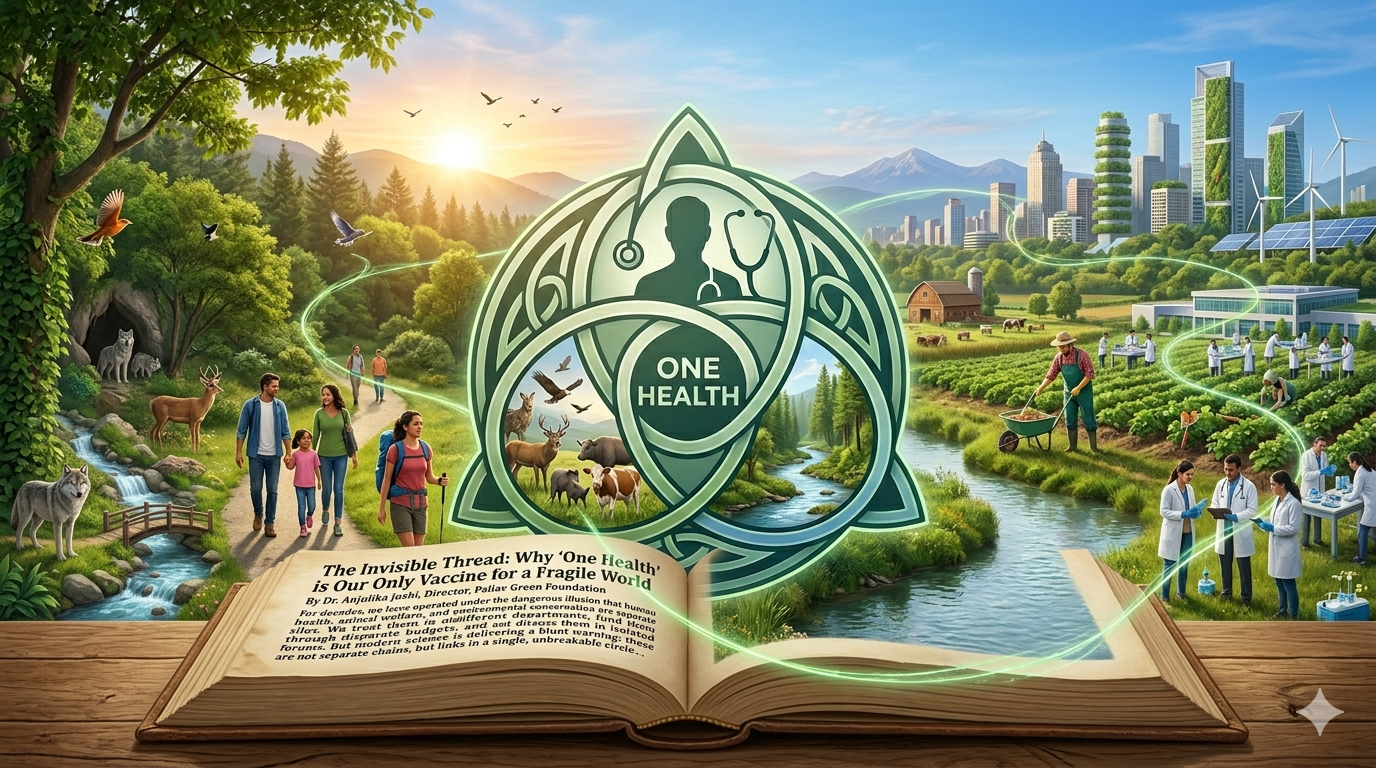
The Invisible Thread: Why ‘One Health’ is Our Only Vaccine for a Fragile World
For decades, we have operated under the dangerous illusion that human health, animal welfare, and environmental conservation are separate silos. We treat them in different departments, fund them through disparate budgets, and discuss them in isolated forums. But modern science is delivering a blunt warning: these are not separate chains, but links in a single, unbreakable circle.
This is the essence of ‘One Health.’ It is the holistic recognition that the well-being of people is inextricably tied to the health of animals and the shared environment we inhabit. In an era of recurring pandemics and climate instability, One Health is no longer just a scientific theory—it is a prerequisite for human survival.
The Biological Domino Effect
In nature, everything operates like a row of dominoes. When we topple one, the entire sequence follows. Our systemic neglect has triggered a chain reaction with three terrifying fronts:
- Zoonotic Spillovers: When we raze forests or treat animals with cruelty, we destroy natural boundaries. Stressed and displaced wildlife become conduits for viruses. As we encroach on these habitats, these pathogens find a way to “jump” to humans, turning local ecological imbalances into global health crises.
- The AMR Time Bomb: The reckless over-application of pesticides on crops and antibiotics in livestock is birthing “Superbugs.” We are fast approaching a future where common infections may once again become untreatable because our medicines have been rendered powerless by our own agricultural practices.
- The Toxic Harvest: Microplastics and chemical runoff are not just aesthetic environmental issues; they are dietary ones. Contaminated soil produces poisoned grain, leading to a slow-motion health crisis. It is no coincidence that nearly one in ten individuals today faces the scourge of lifestyle-induced diseases like cancer.
Urbanization Without Buffers
As our cities expand, we are dismantling our “Green Belts”—the vital buffer zones that once acted as a protective shield between wilderness and civilization. By forcing wildlife into polluted, noisy, and cramped spaces, we skyrocket their stress levels. High stress leads to plummeted immunity in animals, causing them to shed viruses at significantly higher rates. By destroying these buffers, we haven’t just expanded our cities; we have built a highway for pathogens to enter our living rooms.
Furthermore, we must recognize the economic reality: Prevention is a bargain. Halting a disease at its source—within the forest or the farm—is a hundred times cheaper than managing a global pandemic that shutters economies and collapses healthcare systems.
Animal Welfare is Human Defense
We often mistake animal compassion for mere sentimentality. In truth, it is a scientific necessity. Animals kept in cramped, unhygienic conditions act as “biological pressure cookers.” If we do not protect the health of the voiceless, their illnesses will inevitably become our own. Animal welfare is, quite literally, our first line of defense.
A Roadmap for Stewardship
Governments alone cannot fix a broken ecosystem; it requires a shift in the collective consciousness of our citizens. To curb these rising threats, we must adopt a lifestyle of conscious stewardship:
- Reclaiming Urban Planning: We must move beyond concrete jungles. Future development must mandate protected habitats and green belts that allow wildlife to exist without human interference.
- Conscious Consumption: Rejecting single-use plastics, supporting organic and local farming, and practicing responsible waste management for batteries and medicines is the only way to stop the “slow poison” from returning to our taps.
- Active Vigilance: We must become “health sentinels.” Reporting sick or displaced wildlife to authorities is not just an act of kindness; it is an early warning system for the next potential outbreak.
Conclusion
We are not the masters of this ecosystem; we are merely its stakeholders. The air, water, soil, and spirit of the living world are tied together by an invisible thread. If we wish to secure the future for the next generation, we must first heal the planet and its silent inhabitants.
The message is clear: A sick planet cannot host healthy residents. To heal ourselves, we must first restore our world.
Author


About The Author